science.am

Main navigation

  • text
  • lab
  • About

Science.lab

SCIENCE.LAB is a place where experiments, tests, records of activity are recorded. This ranges from work with the Central Laser Facility to studio based work in support of art/science projects.

Research paper

lab | text |
January 6th, 2019

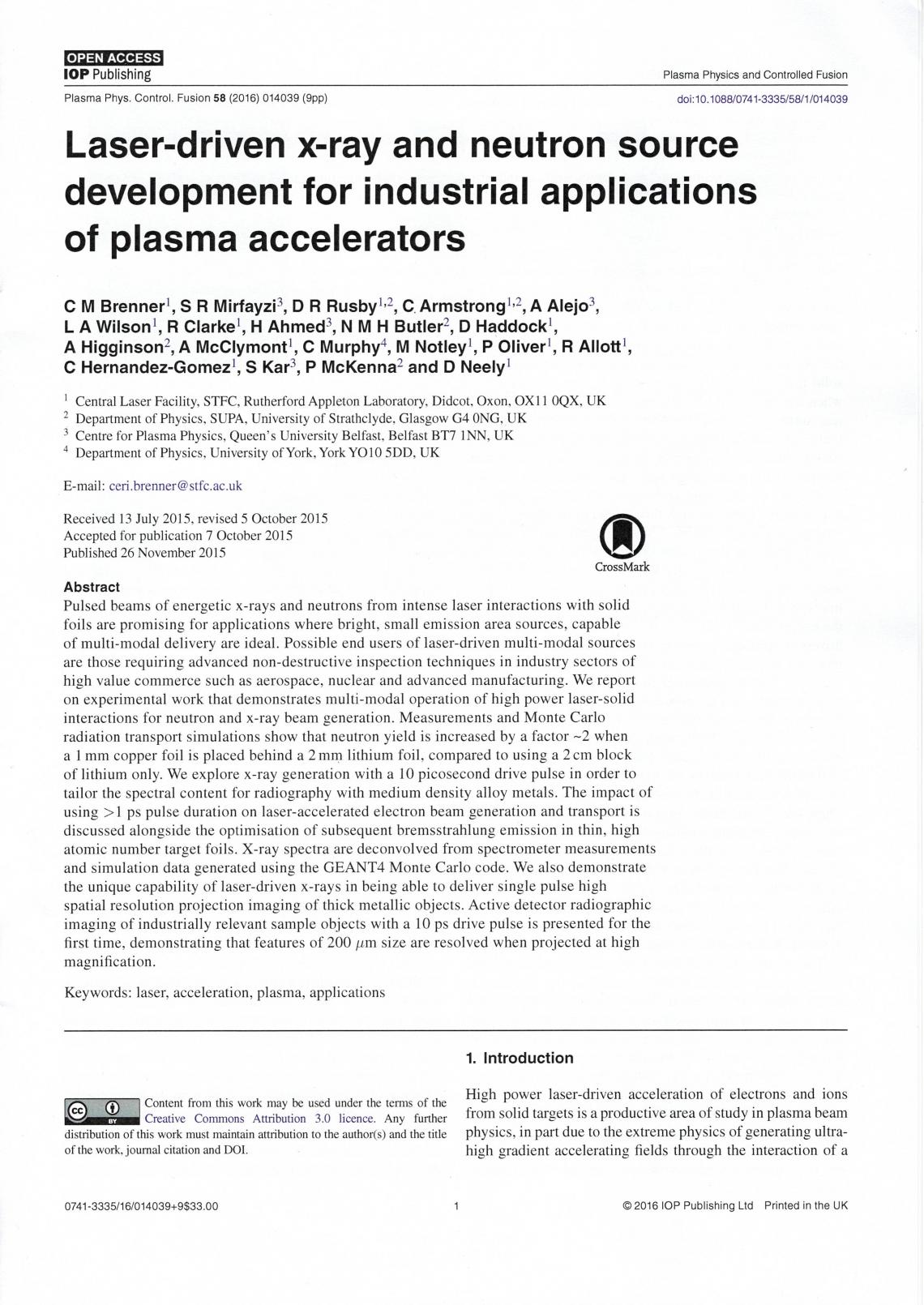
A paper was published in the Institute of Physics journal, Plasma and Controlled Fusion titled Laser-driven x-ray and neutron source development for industrial applications of plasma accelerators. In this paper I am named as one of the authors:

Click here to see the research paper

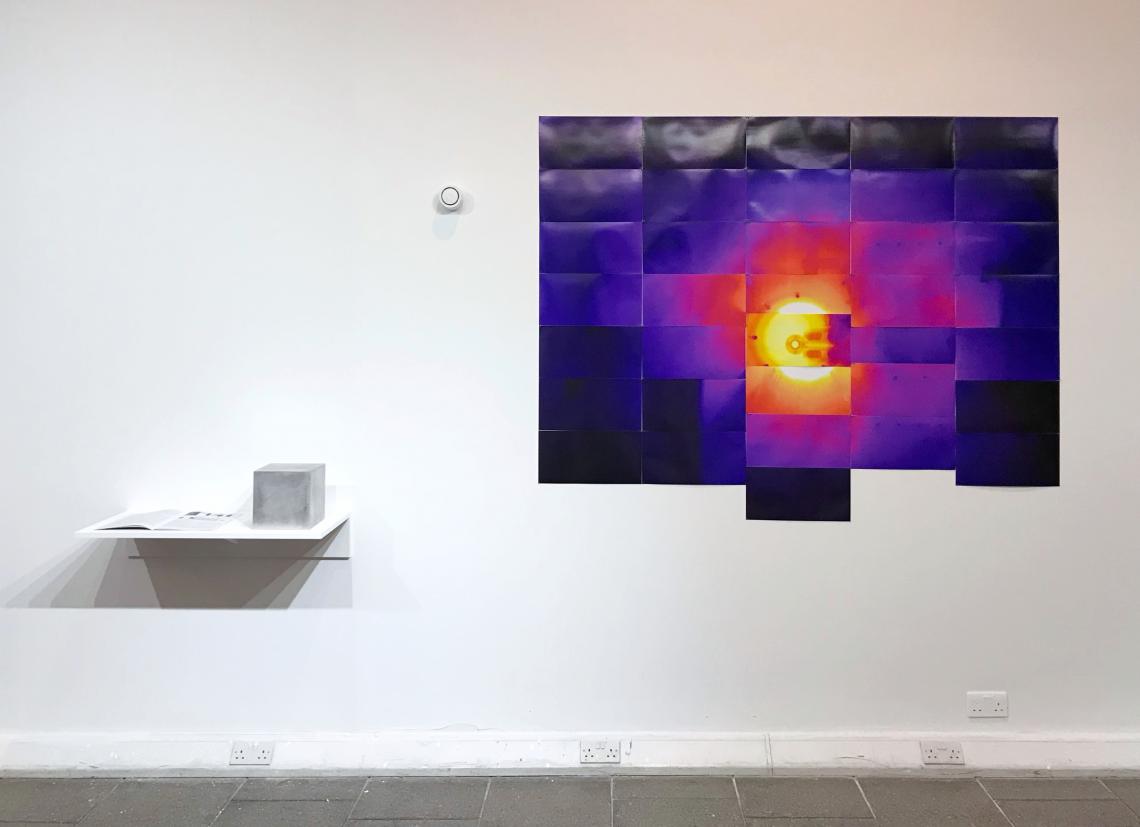
A hard copy of the research paper was shown as part of the installation What if we could look at the Sun with x-ray vision at the London Design Festival in 2018. In this exhibition it becomes a conceptual piece, at once a piece of science and a piece of art.

My earliest ambitions with this…
Everything we are capable of seeing

lab | text |
January 2nd, 2019

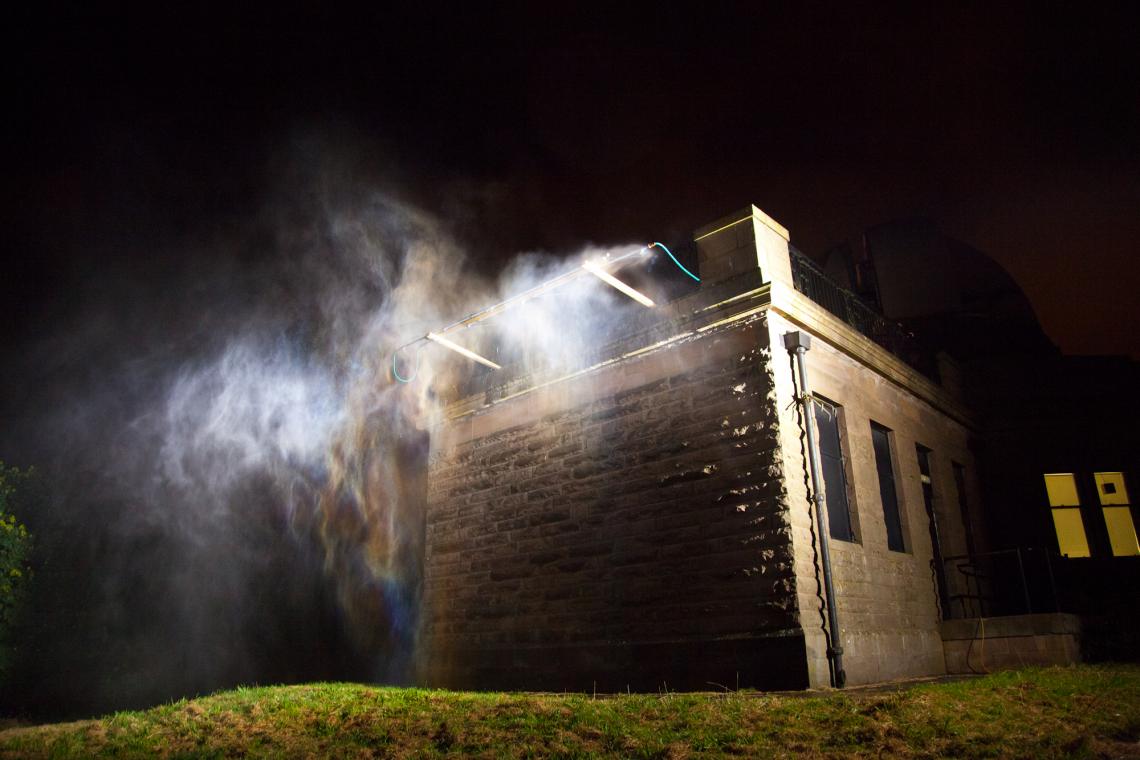
Everything we are capable of seeing is an artwork that creates a rainbow. It is formed from a sprinkler system of water vapour and a light. 

My interest in the rainbow was prompted by an observation Richard Dawkins makes in his 1998 book Unweaving the Rainbow. In it he talks of how Keats accuses Newton (and science) of destroying the poetry of the rainbow by explaining the origin of its colours. Keats poem Lamia talks of how “Philosophy will clip an Angel’s wings” and that it will "Unweave a rainbow, as it erewhile made”.

In recreating a rainbow in the…

What if we could look at the sun with x-ray vision (contact x-ray plates on the Vulcan Target Area West vacuum chamber, 36 separate shots)

lab | text |
December 15th, 2018
What if we could look at the sun with x-ray vision

Exhibited at the London Design Festival, London College of Communication, September 2018.

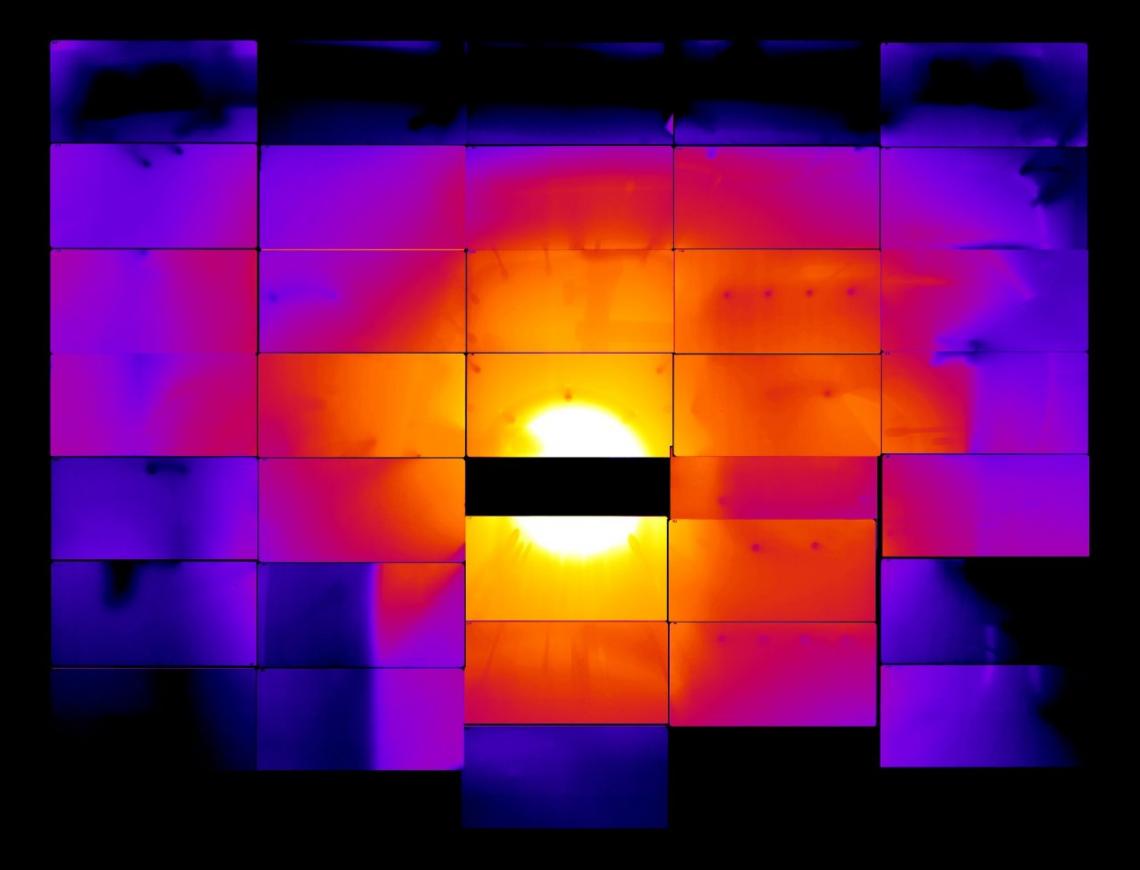
What if we could look at the sun with x-ray vision (contact x-ray plates on the Vulcan Target Area West vacuum chamber, 36 separate shots) is a collaborative artwork created with scientists at the Central Laser Facility in Oxfordshire, England. I was invited to be part of their experiment as an artist as well as an active scientific participant, their aim was to demonstrate the effectiveness of laser technology to see through layers of material using x-rays and neutron beams.

During…

Welding the test object for the Vulcan laser

lab |
October 20th, 2018
Instagram post
View this post on Instagram

Getting ready for some high tech physics research by welding an aluminium cube

A post shared by Alistair McClymont (@alistairmcclymont) on Feb 26, 2015 at 11:34am PST

Fabricating aluminium cubes for the Vulcan laser

Aluminium is relatively invisible to xrays, the test object was designed to hide something in a box that was completely welded shut. Inside the box is an object that ended up in the research paper based on this experiment

x-ray image of chamber

lab |
April 4th, 2015

Early days with this image, but here’s some work in progress with a montage of x-ray plates that were attached to the wall of a vacuum chamber. In the centre of which a laser plasma produce high energy x-rays. Over the course of a month I imaged most of the area of the vacuum chamber. Even though the chamber is very thick aluminium its fairly invisible to the x-rays. But you can see the steel nuts and bolts holding the chamber together. What looks like windows in the chamber are actually solid aluminium, but thinner than the surrounding walls (3mm vs up to 30mm).

Long shadows are…

Vulcan Target Area West laser plasma

lab |
April 3rd, 2015

A photograph of the plasma in Beam 8 of the Vulcan Target Area West laser.

This image shows the laser focused on a metal target. The laser is in the infra-red and is invisible in this image. The metal turns into plasma, a very hot 4th state of matter. What you can see is the plasma and two distinct cones of plasma and material ejected from the target from both the front (laser side) of the target and the rear.

This experiment was designed to make highly penetrating x-rays to investigate their imaging properties.

x-ray image plate

lab |
March 27th, 2015

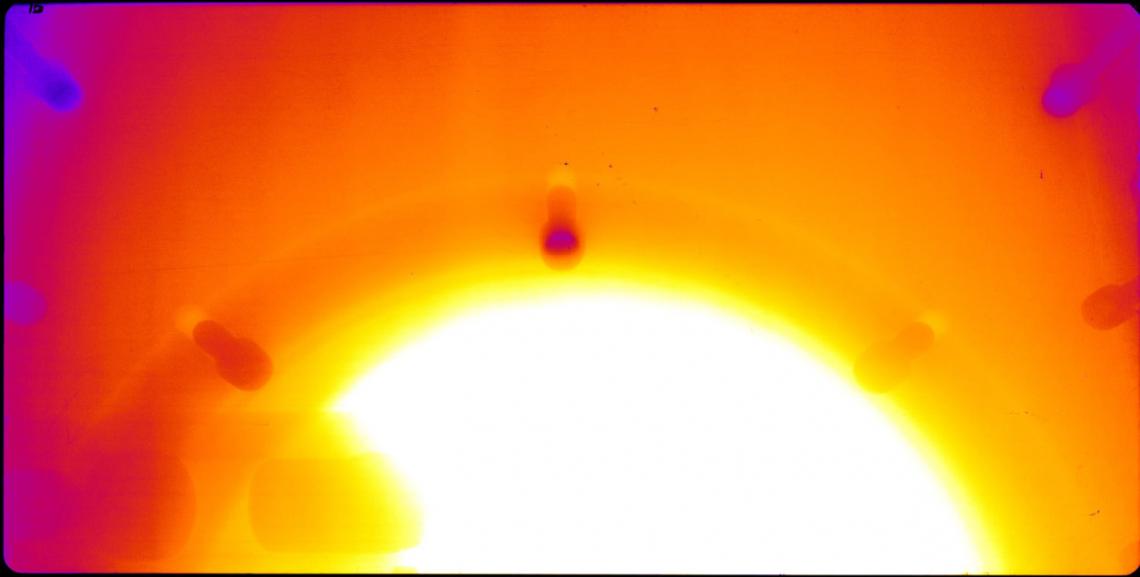
An x-ray image plate attached to the outside of the chamber.

The chamber is aluminium with a thinner aluminium circular window which appears lighter. You can see right through the layers of aluminium and the steel bolts holding it together.

This is part of a number of images i’m taking while scientists experiment with producing x-rays from a high energy laser interacting with a target (see the last post for an explanation of that).

A laser burn. 

lab |
March 5th, 2015

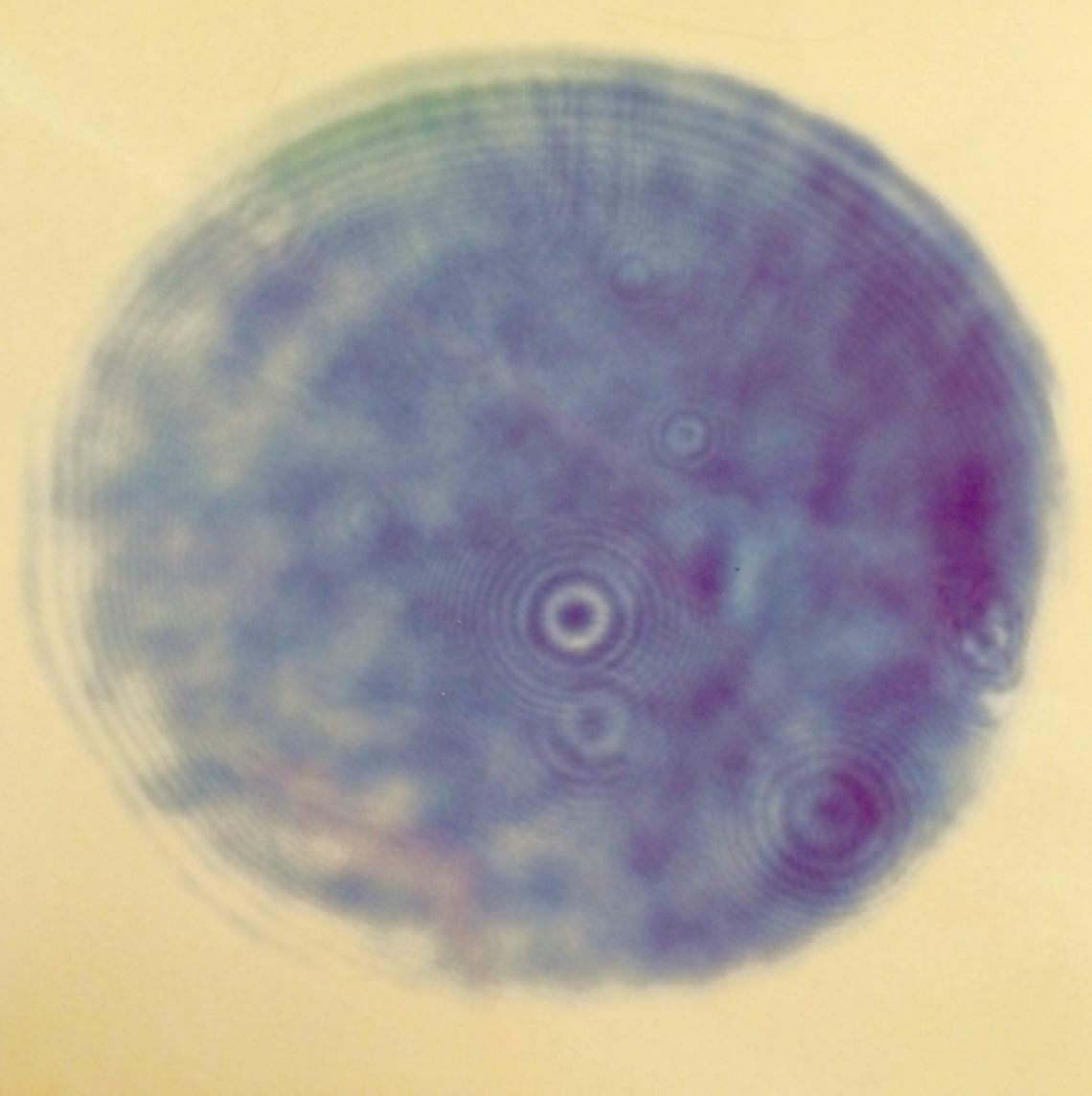
Photo-sensitive paper placed in the laser beam to see how uniform/clean the beam is looking.

A miniature gold foil particle accelerator

lab |
March 5th, 2015

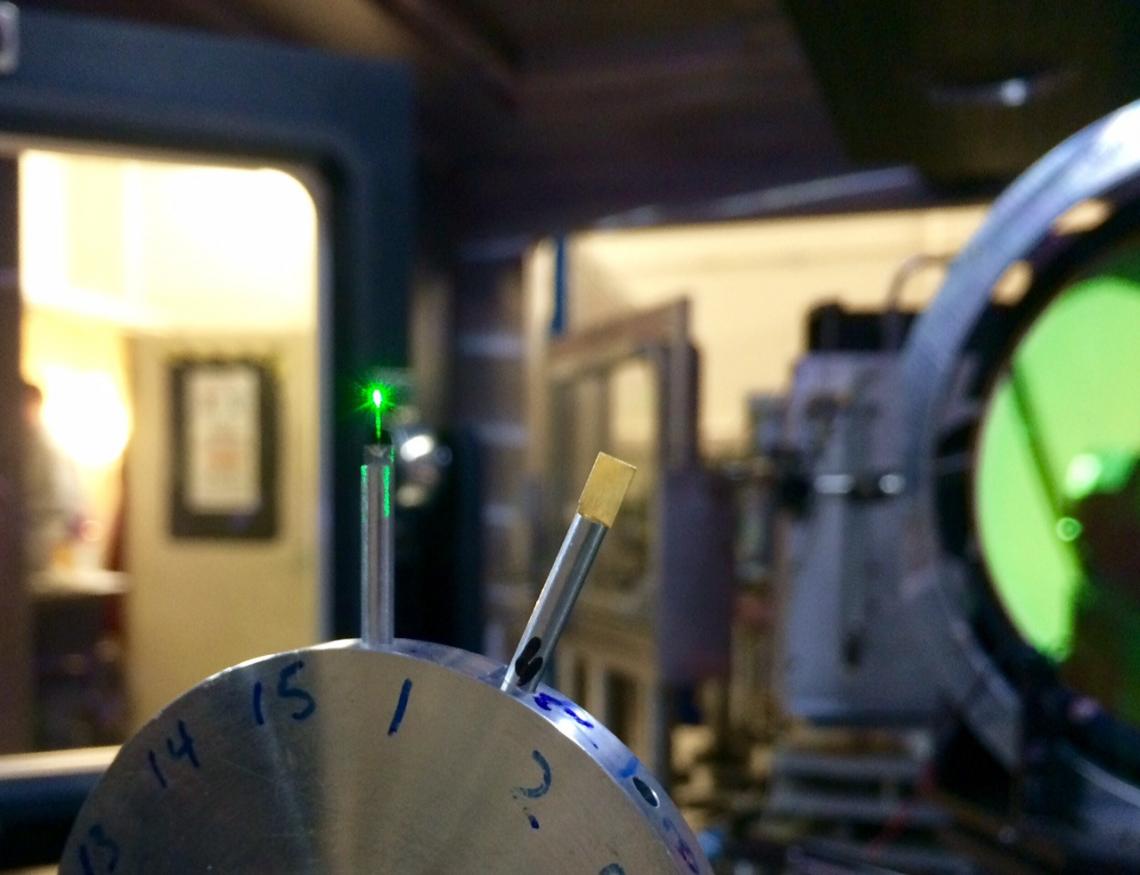
In the first image you can see a 10 micron thick laboratory grade piece of gold foil and an alignment wire with a laser hitting it. The piece of gold foil will be rotated to be in the path of the Vulcan laser beam to produce x-ray and neutron beams.

How it works:

As the laser hits the gold it turns the front surface into very high temperature plasma. The laser pushes electrons from front surface of plasma through the foil. They pop out of the other side and pull out protons behind them. This is essentially the particle accelerator. As these electrons stream through the gold…

Experimenting with the Vulcan Laser

lab |
March 4th, 2015

Tomorrow I’ll be visiting the Central Laser Facility in Oxfordshire again to work with a group of scientists on the Vulcan laser.

The Vulcan laser is one of a small group of petawatt lasers, currently the most powerful in the world. Over the next month a group of scientists will be using the laser to generate X-rays by hitting a target and creating plasma. The X-rays themselves will be used to test new forms of imaging.

I’m creating objects that will be placed in the X-ray beam and will be producing images from them. I’ll also be documenting the process with an aim to…

Science . Alistair McClymont

An ongoing record of art / science research by Alistair McClymont