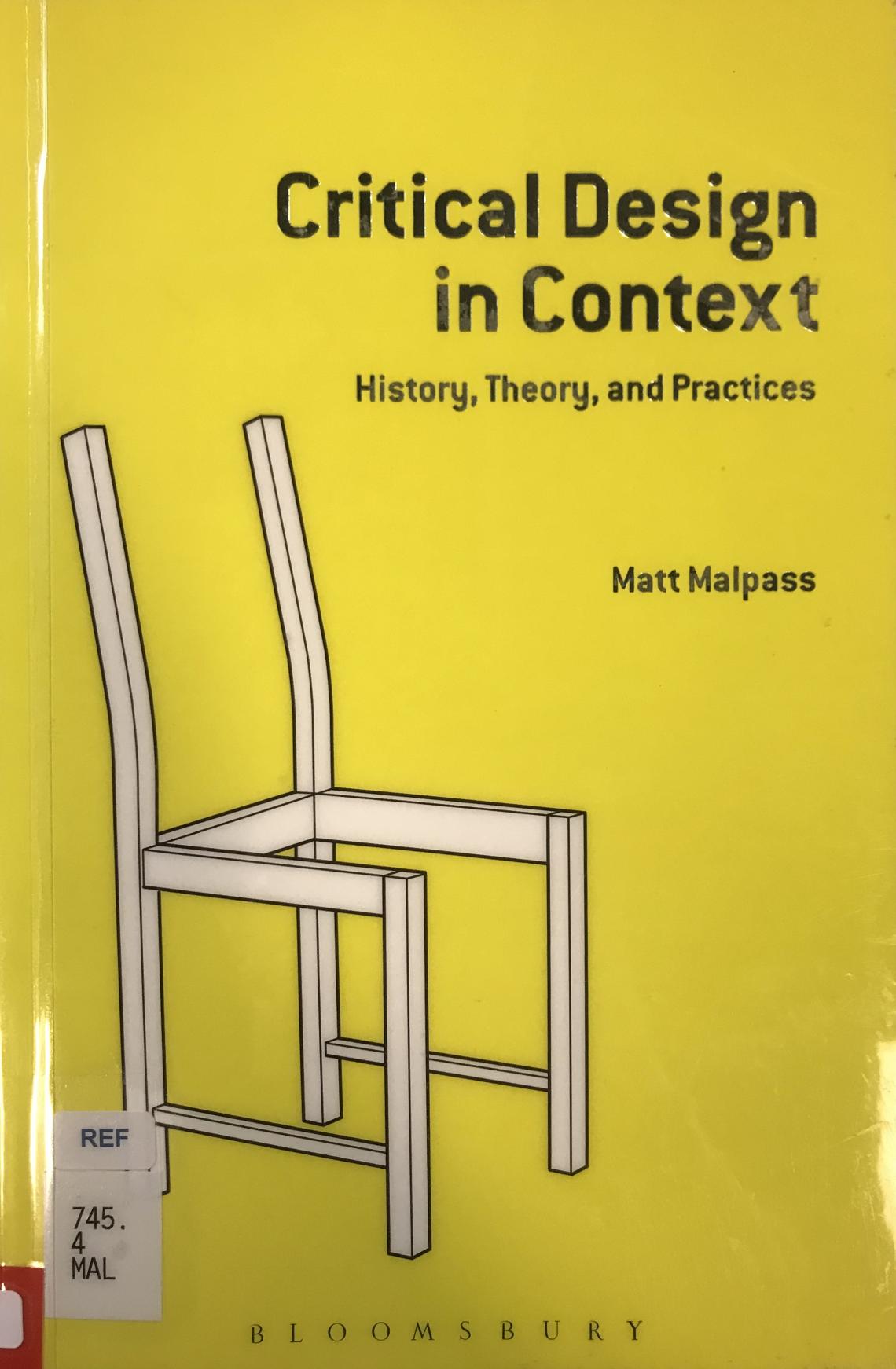
Critical design practice - quotes from the book
“In critical design practice, designers reject a role for industrial design that is limited to the production of objects conceived solely for fiscal gain and technological development. It seeks to avoid conventional production and consumption, offering an alternative use of industrial design. instead, they propose that product and industrial design can be used to mobilise debate and inquire into matters of concern through the creative processes involved when designing objects. They propose that the forms of interaction that occur within the design process, and through a user’s engagement with design work, can bring into relief issues by the materialisation of these issues in objects and the experiences afforded. Guided by this rationale, critical design practice aims to challenge the current state of industrial design.”
“Recently, a more focused critical discourse has emerged in the presentation and exhibition of work. For example, over summer 2014 as part of MoMA’s Design and Violence, a project that invited curators to propose examples of work for an open online debate, the design writer John Thackara introduced The Republic of Salivation (2010) by Michael Burton and Michiko Nitta. The project depicts a dystopian future scenario and the consequences of global food shortage. A discussion emerged in reponse that challenged the insular discourse on critical and speculative design. It challenged the grounding of many examples of critical design asking if the propositions pay enough attention to the causes of threats that the work addresses or the hegemonies that they challenge. This lie of thought argues that critical design practice often appears radical, but simply maybe masquerading as radical because of the violence and shock in the proposition that the designers make and the expectations of use that they fabricate. The debate echoed design scholars who have targeted critique at critical design’s lack of engagement with discourse beyond art and design and how in within the practice designers are for the most part talking to themselves and peers and often fails o engage the root of problems and rather elaborately project fictional consequence.”